Marius Manole
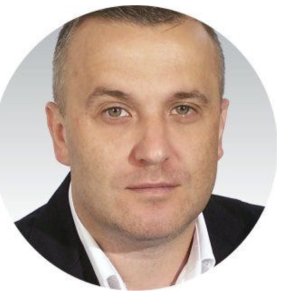
Marius Manole, DDS, PhD, Associate Professor of Propedeutic and Esthetic Dentistry, Department of Prosthetics and Dental Materials, Faculty of Dentistry, University of Medicine and Pharmacy „Iuliu Hatieganu” Cluj-Napoca, Vice Dean – Academic, Management and Development, I graduated the Faculty of Dentistry UMF Cluj-Napoca in 2001, holds a PhD in Medicine and a Master degree in implant supported prosthesis and radio-diagnosis course. More then 20 years experience in dental prosthetics, dental esthetics and implant supported prothesis.
Professional and Scientific activities : 1 books published as co –autor, more then 40 papers published in extenso, many scientific presentations and paper published as abstract in the proceeding of international conferences, invited speaker at several national scientific meetings, reviewer for several specialty scientific journals. Also, he was involved in various research projects focused on dental biomaterials. Research interest: prosthetic dentistry, prosthetic on implants, esthetic dentistry, dental biomaterials, digital dentistry.
Abstract
Comprehensive Prosthetic Planning in Implant Based Oral Rehabilitations
Marius Manole
Department of Prosthetics and Dental Materials, Faculty of Dentistry,
Iuliu Hatieganu University of Medicine and Pharmacy, 400012 Cluj-Napoca, Romania
*e-mail:marius.manole@umfcluj.ro
Introduction: Comprehensive oral rehabilitation requires an integrated treatment approach that harmonizes surgical and prosthetic considerations. The evolution of digital technologies, imaging modalities, and implant systems has significantly enhanced clinicians’ ability to achieve predictable functional and esthetic outcomes. Nevertheless, the complexity of full-mouth rehabilitation demands precise, prosthetically oriented planning to ensure long-term success.
Aim: This presentation aims to emphasize the role of prosthetic-driven implant planning in full-mouth rehabilitation and to demonstrate how a digitally guided workflow contributes to predictable and esthetically pleasing results.
Materials and Methods: Patients requiring extensive oral rehabilitation were assessed both clinically and radiographically. Cone-beam computed tomography (CBCT), diagnostic wax-ups, and virtual planning software were employed to design the definitive prosthetic framework prior to implant placement. Guided surgical protocols were used when indicated, and final restorations were fabricated through CAD/CAM technology. Clinical evaluation focused on functional performance, esthetic integration, and patient satisfaction.
Results and Discussion: Prosthetic-driven planning facilitated accurate implant positioning relative to the final restorative design, minimizing surgical complications and optimizing biomechanical load distribution. The integration of digital planning and guided surgery improved procedural predictability, reduced intraoperative adjustments, and enhanced prosthetic accuracy. Patients reported high satisfaction levels concerning function and esthetics. Limitations included the initial investment in digital technology and the learning curve required for clinical implementation.
Conclusions: Prosthetic-driven implant planning is fundamental to the success of full-mouth rehabilitation. A prosthetic-first, digitally supported workflow—combined with interdisciplinary collaboration—ensures predictable, functional, and esthetic outcomes, ultimately enhancing patient satisfaction and long-term treatment stability.
BioReMed 2025
Date de contact:
Antoniac Iulian
313 Splaiul Independentei Street,
J Building District 6,
Bucharest, Romania, 060032
All rights reserved © copyright by bioremed.ro