Nermin DemirkoI
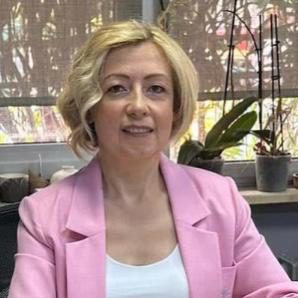
Nermin Demirkol received her B.Sc. degree from Dumlupınar University as a ceramic engineer, Türkiye in 2001, and M.Sc. degree from Gebze Institute of Technology, Türkiye in 2004 and Ph.D. degree from the İstanbul Technical University (ITU), Türkiye in 2013. Since 2004, Demirkol has presented and published papers on the production and characterization of ceramic materials in many countries including Belgium, Germany, USA, Japan, Spain, France, England, Sweden, Romania, China, Greece, Hungary. She has many publications in SCI. In 2011, she received a scientific achievement award from Kocaeli University for her SCI publications. In 2014, her biography was published among the World Successful Scientists by the Marquis Who's Who Publication Board in the UK. In 2015, she was listed among the TOP 100 Engineers by the biography center in the UK. She is a board member of Biomaterials and Tissue Engineering Society (BTES) and Clay Sciences Society, member of Turkish Ceramic Society, European Ceramic Society ECerS, Turkish Electron Microscopy Society, International Society for Ceramics in Medicine ISCM and European Society for Biomaterials (ESB). She served as chair, organizing board and scientific board member in many international symposiums and congresses. She continues her studies on the production and characterization of traditional ceramics, bioceramic composites, 3D printing technology, reuse of waste materials in ceramic material production and ceramic glazes. She is involved in many national and international projects as an executive and researcher. She is an Associate Professor at Kocaeli University, Faculty of Fine Arts, Department of Ceramics.
Abstract
Green Hydrothermal Assisted Sol Gel Synthesis of Bioactive Glasses for Regenerative Medicine
Nermin DEMİRKOL
Department of Ceramics, Kocaeli University, Türkiye, nermin.demirkol@kocaeli.edu.tr
Bioactive glasses represent a transformative class of biomaterials capable of stimulating and directing cellular responses for tissue regeneration. In recent years, advances in their composition and fabrication techniques have enabled the development of tailored bioactive glasses with enhanced mechanical properties, degradation rates, and ion release profiles.
This presentation introduces a hydrothermal-assisted sol–gel synthesis route for bioactive glass with a molar composition of 60SiO₂–36CaO–4P₂O₅, designed to enhance efficiency and scalability for biomedical applications. By incorporating a hydrothermal system, the sol–gel transition was significantly accelerated, reducing processing time while maintaining material quality. Post-synthesis calcination was employed to remove residual organics and stabilize the structure. The resulting amorphous glass powders were extensively characterized: XRD confirmed their non-crystalline nature, DTA/TGA provided insights into thermal behavior, and FTIR spectra indicated the formation of a typical silicate network. SEM analysis revealed a homogeneous nanoscale morphology. Bioactivity was assessed via in vitro testing in simulated body fluid (SBF), where the formation of a hydroxyapatite-like layer on the surface affirmed the material’s potential for bone bonding.
This method demonstrates a time-efficient, scalable alternative to conventional synthesis routes and opens new pathways for the development of next-generation bioactive materials in tissue engineering and regenerative medicine.
BioReMed 2025
Date de contact:
Antoniac Iulian
313 Splaiul Independentei Street,
J Building District 6,
Bucharest, Romania, 060032
All rights reserved © copyright by bioremed.ro