Nicanor Cimpoesu
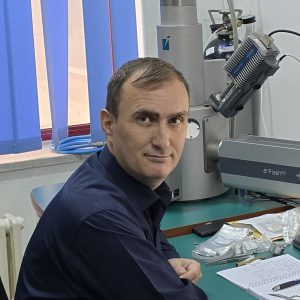
Nicanor Cimpoesu, Ph.D., Habil. Full Professor, Department of Materials Science, Gheorghe Asachi Technical University of Iași. Vice Dean of Materials Science and Engineering Faculty, Technical University Gheorghe Asachi from Iasi, Erasmus coordinator of Materials Science and Engineering Faculty and coordinator of ESIM laboratory (https://esimsim.ro/). Born / Nationality: Romania. Received Ph.D. (Engineering) in 2010, with a thesis investigating the internal friction properties of metallic shape-memory alloys. Achieved habilitation (habilitation degree) in 2018, affirming full professorship, Phd students coordinator since 2019 with 3 doctors confirmed. Authored approximately 235 scientific publications (ResearchGate) garnered about 1412 citations on ResearchGate, and around 1800 citations on Google Scholar.
The author has the H factor 19 in 2025 (WoS), 20 (1716 citations on Google Scholars and Scopus. Published more than 10 technical content books (like Active Materials for Medical Applications, Corrosion Resistance Enhancement of Materials Surface, Automotive Brake Disc Materials). Coordinated four national and International research projects like the European Horizon 2020 project CeLaTeBa(SURPF2301300009), focusing on microstructure of materials, biodegradable metallic materials, corrosion resistance and smart materials. Participated in more than 30 national research projects, including: development of high-entropy alloy-based materials for tooling (PN-II-PT-PCCA-2013-4-1048), fabrication of high-damping thin shape memory films via pulsed laser deposition (PN-II-RU-PD-2011-3-0186). CNATDCU member since 2024, reviewer for different ISI Journals, editor of ASTR journal.
Abstract
Iron-based alloys for medical applications: results and perspectives on the use of biodegradable materials in modern implantology
Ana-Maria Roman 1, Nicanor Cimpoeșu*,2, Gheorghe Bădărău 3, Romeu Chelariu4, Mihai Axinte5, Tiberiu Șutic6, Ramona Cimpoeșu7
1 Materials Science Department, Materials Science and Engineering Faculty, Technical University Gheorghe Asachi from Iasi, Street Prof. dr. doc. D. Mangeron no. 41, 700050, Iasi, Romania, ana-maria.roman@academic.tuiasi.ro
2 Materials Science Department, Materials Science and Engineering Faculty, Technical University Gheorghe Asachi from Iasi, Street Prof. dr. doc. D. Mangeron no. 41, 700050, Iasi, Romania, nicanor.cimpoesu@academic.tuiasi.ro
3 Materials Science Department, Materials Science and Engineering Faculty, Technical University Gheorghe Asachi from Iasi, Street Prof. dr. doc. D. Mangeron no. 41, 700050, Iasi, Romania, Gheorghe.badarau@academic.tuiasi.ro
4 Materials Science Department, Materials Science and Engineering Faculty, Technical University Gheorghe Asachi from Iasi, Street Prof. dr. doc. D. Mangeron no. 41, 700050, Iasi, Romania, romeu.chelariu@academic.tuiasi.ro
5 Materials Science Department, Materials Science and Engineering Faculty, Technical University Gheorghe Asachi from Iasi, Street Prof. dr. doc. D. Mangeron no. 41, 700050, Iasi, Romania, mihai.axinte@academic.tuiasi.ro
6 Materials Science Department, Materials Science and Engineering Faculty, Technical University Gheorghe Asachi from Iasi, Street Prof. dr. doc. D. Mangeron no. 41, 700050, Iasi, Romania, tiberiu.sutic@academic.tuiasi.ro
7 Materials Science Department, Materials Science and Engineering Faculty, Technical University Gheorghe Asachi from Iasi, Street Prof. dr. doc. D. Mangeron no. 41, 700050, Iasi, Romania, ramona.cimpoesu@academic.tuiasi.ro
The development of biodegradable metallic materials is a priority direction in the field of biomaterials, with the objective of obtaining temporary implants that provide mechanical support during the healing process and subsequently degrade in a controlled manner [1]. The present study investigates the influence of alloying elements Mg, Ca, Cu, and Ag on the structural, mechanical, and electrochemical behavior of Fe-Mn-Si based alloys. The effect of bioactive hydroxyapatite-zirconia (HA-ZrO2) coatings obtained by pulsed laser deposition (PLD) on the degradation characteristics of Fe-based alloys was also evaluated. Material characterization was performed using a variety of analytical methods, including scanning electron microscopy (SEM/EDX), X-ray diffraction (XRD), atomic force microscopy (AFM), differential scanning calorimetry (DSC), dynamic mechanical analysis (DMA), and Fourier-transform infrared spectroscopy (FTIR)/nano-FTIR spectroscopy [2]. The electrochemical properties were evaluated through immersion tests in simulated fluids (SBF, HBSS) and by advanced electrochemical methods (EIS, linear and cyclic polarization). The results showed that the addition of Ag accelerates the corrosion rate and improves the antibacterial properties, while the elements Mg and Ca promote uniform degradation and stimulate the deposition of phospho-calcic compounds. The mechano-dynamic behavior and shape memory properties of these alloys confirm their potential for clinical applications, such as coronary stents and temporary orthopedic implants. The study demonstrates that the integration of alloying elements, in conjunction with the application of bioactive coatings, constitutes an effective strategy for optimizing the properties of biodegradable metallic materials.
References.
[1] Gąsior, G., Szczepański, J., Radtke, A., Biodegradable Iron-Based Materials—What Was Done and What More Can Be Done?, Materials (Basel). 2021 Jun 18;14(12):3381. doi: 10.3390/ma14123381.
[2] Roman, A.M., Cimpoeșu, R., Pricop, B., Lohan, N.M., Cazacu, M.M., Bujoreanu, L.G., Panaghie,C., Zegan G, Cimpoeșu, N., Murariu, A.M., (2023a), Influence of dynamic strain sweep on the degradation behavior of FeMnSi-Ag shape memory alloys, J. Funct. Biomater., 14, 1-22.
BioReMed 2025
Date de contact:
Antoniac Iulian
313 Splaiul Independentei Street,
J Building District 6,
Bucharest, Romania, 060032
All rights reserved © copyright by bioremed.ro